
Exercise & Covid
The benefit of exercise in the reduction of Covid mortality
Today, Longevity Exercise Physiology Drummoyne, Edgecliff, Marrickville, Bella Vista, Randwick, Pymble, Neutral Bay and Balmain discuss the benefit of exercise in the reduction of Covid mortality risk.
INTRODUCTION
The SARS-CoV-2 (COVID-19) virus is continuing to affect the world over the last few years, with new variants coming forth that present and affect people differently. More research is constantly released showing that different lifestyle factors can influence the risk of catching and developing COVID-19, as well as the presentation of COVID-19 symptoms and the risk of mortality due to COVID-19. A worldwide study in 2020 (Tison et al., 2020) showed that the average step count in a cohort of 455,404 people was reduced by 27.3% within 30 days after the World Health Organisation (WHO) declared that the world was in the COVID-19 pandemic.
This significant reduction of activity levels due to isolation, quarantine rules and regulations have seriously dampened the incidental and overall activity levels of people in society. Research has already shown that a sedentary lifestyle is a risk factor for many forms of cardiovascular, respiratory and metabolic diseases. However, for people who were able to maintain their activity levels throughout this period, they have been able to effectively minimise their risk of significantly negative health outcomes. Studies are now being released to show that exercise is an effective means of reducing the risk and severity of COVID-19.

WHAT’S THE BENEFIT OF BEING ACTIVE?
Physical activity is already well researched and proven to improve cardiovascular health, increase lung capacity and muscle strength and improve mental health. It’s also proven that meeting physical activity guidelines is effective in improving immune function, lowering incidences and reducing intensity of symptoms and mortality risk for viral infections, and reduces the risk of systemic inflammation, which is a main contributor to lung damage caused by COVID-19 (Sallis et al., 2021).
In terms of how physical activity affects the COVID-19 situation, a large scale study by Steenkamp et al., 2022 showed that patients in the high physical activity category had a 34% lower risk of hospital admission, 41% lower risk of Intensive Care Unit (ICU) admission, 45% lower risk of requiring ventilation and a 42% lower risk of death compared to those with a lower level of activity. This study was also completed in a cohort who were NOT vaccinated, which further demonstrates the effectiveness of physical activity in the prevention of serious negative outcomes for COVID-19.
IS MORE EXERCISE BETTER FOR COVID-19?
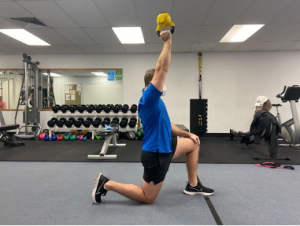
The ACSM Guidelines states that every healthy adult should try to aim for 150 minutes of moderate to vigorous intensity exercise every week, and recommends two bouts of resistance training for every muscle group per week. A large study in South Korea by Cho et al., 2021 showed that meeting guidelines was associated with a 10% lower risk of COVID-19 infection and a 53% lower risk of COVID-19 infection-related mortality.
“In the highest quintile of physical activity, there was a 25% and 77% lower risk of COVID-19 infection and mortality, respectively, compared with the physically inactive group”
As such, there is a significant body of evidence growing that shows that a higher dose of exercise every week provides a greater protective outcome and reduction in risk of contracting COVID-19. Due to the nature of COVID-19, it’s often difficult to be able to exercise effectively as a result of the physiological effects of the virus. Our Exercises Physiologists at Longevity are trained in being able to prescribe an individualised exercise program that’s based on your biological markers and presentation to find a suitable level of activity for your current level of health. It is definitely safe for you to return to exercise in a graded manner, but please consult a health professional first before doing so as the disease can often cause unexpected health deteriorations especially after the isolation period.
If you or you know of someone who has been affected by COVID-19 and would like to increase your activity levels to reduce the risks of COVID-19, call Longevity Exercise Physiology Edgecliff, Pymble, Marrickville, Randwick, Drummoyne, Balmain, Bella Vista and Neutral Bay on 1300 964 002 to book in an initial consultation.

Written by Kevin Shu
REFERENCES
Tison, G. H., Avram, R., Kuhar, P., Abreau, S., Marcus, G. M., Pletcher, M. J., & Olgin, J. E. (2020). Worldwide Effect of COVID-19 on Physical Activity: A Descriptive Study. Annals of internal medicine, 173(9), 767–770. https://doi.org/10.7326/M20-2665
Steenkamp, L., Saggers, R. T., Bandini, R., Stranges, S., Choi, Y. H., Thornton, J. S., … & Patricios, J. (2022). Small steps, strong shield: directly measured, moderate physical activity in 65 361 adults is associated with significant protective effects from severe COVID-19 outcomes. British journal of sports medicine.
Sallis, R., Young, D. R., Tartof, S. Y., Sallis, J. F., Sall, J., Li, Q., Smith, G. N., & Cohen, D. A. (2021). Physical inactivity is associated with a higher risk for severe COVID-19 outcomes: a study in 48 440 adult patients. British journal of sports medicine, 55(19), 1099-1105.
Cho, D. H., Lee, S. J., Jae, S. Y., Kim, W. J., Ha, S. J., Gwon, J. G., Choi, J., Kim, D. W., & Kim, J. Y. (2021). Physical Activity and the Risk of COVID-19 Infection and Mortality: A Nationwide Population-Based Case-Control Study. Journal of clinical medicine, 10(7), 1539. https://doi.org/10.3390/jcm10071539