
Lower Back Pain and Exercise: How Longevity Exercise Physiology Can Help You Move Without Pain
Dealing with persistent lower back pain? Struggling to sit, stand, or move comfortably through your day?
You’re far from alone. Lower back pain affects around 4 million Australians and is the leading cause of disability worldwide. Whether your pain is sharp and sudden or a dull, constant ache, it can significantly disrupt your work, your sleep, and your quality of life.
At Longevity Exercise Physiology, we specialise in evidence based exercise programs designed to reduce your lower back pain, restore your function, and help you get back to doing what you love.
Understanding Lower Back Pain
Lower back pain refers to discomfort or pain felt in the area between the lower ribs and the gluteal folds. It can range from a mild, persistent ache to sudden, sharp pain that limits your ability to move. Lower back pain can be acute (lasting less than six weeks), subacute (six to twelve weeks), or chronic (lasting longer than twelve weeks).
While lower back pain is extremely common, the causes vary widely. In most cases, the pain is not caused by a serious underlying condition but rather by a combination of muscular, postural, and lifestyle factors that can be effectively managed with the right exercise program.
Common Causes of Lower Back Pain
- Muscle strain or overuse from repetitive movements or improper lifting
- Poor posture, particularly from prolonged sitting at a desk or in a vehicle
- Physical inactivity and weak core and back muscles
- Disc injuries, including disc bulges and herniations
- Osteoarthritis and age related degeneration of the spine
- Sciatica, where pain radiates from the lower back into the leg
- Stress, anxiety, and poor sleep, which can amplify pain perception
Lower Back Pain in Australia: The Numbers
According to the Australian Institute of Health and Welfare (AIHW), an estimated 4 million Australians, or one in six people, experience back problems. Back pain is the third leading cause of disease burden in Australia, accounting for 4.2% of the total burden, and costs the health system approximately $3.4 billion per year. The Global Burden of Disease Study projects that Australia will see a nearly 50% increase in lower back pain cases by 2050. Lower back pain is also the most common condition keeping older Australians aged 45 to 64 out of the workforce.
If this sounds like something you’ve been struggling with, keep reading to learn how targeted exercise can lead to better health and a stronger, pain free back!
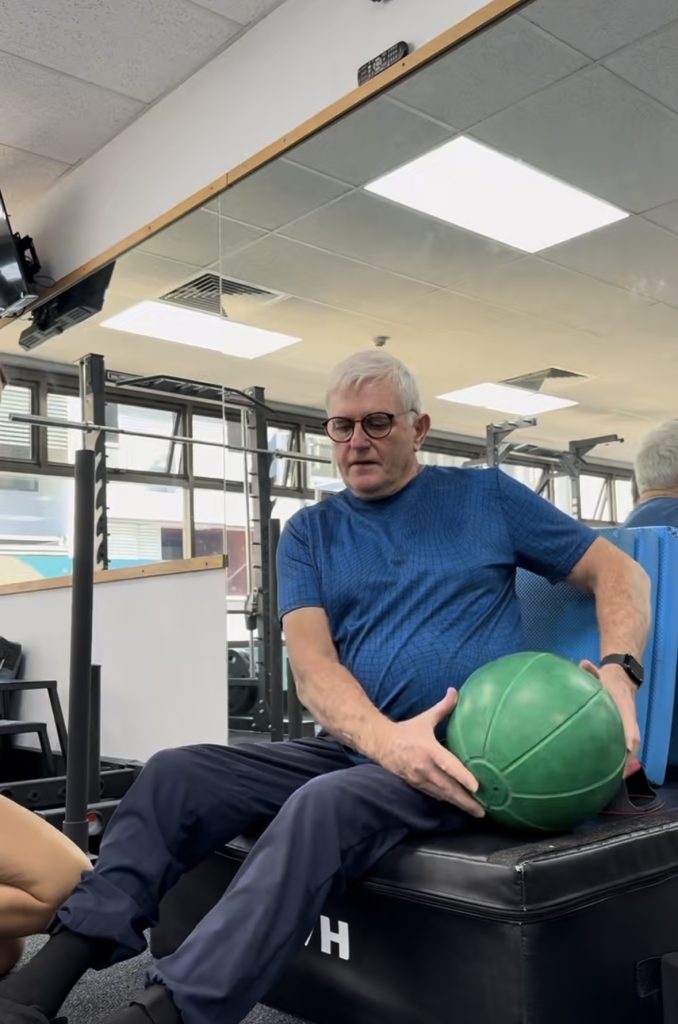
Benefits of Exercise for Lower Back Pain
Exercise is consistently recommended as the most effective treatment for lower back pain by clinical guidelines in Australia and internationally. Research shows that staying active and following a structured exercise program leads to better outcomes than rest, medication, or surgery for the majority of people with lower back pain. A combination of strengthening, flexibility, and aerobic exercise has been shown to reduce pain intensity, improve function, and prevent recurrence.
Here’s how exercise helps with lower back pain:
- Strengthens the muscles that support your spine, reducing strain and instability
- Improves flexibility and range of motion, helping to relieve stiffness
- Enhances posture, reducing the load on your lower back during daily activities
- Promotes blood flow and healing to injured tissues
- Reduces the risk of future episodes and prevents lower back pain from becoming chronic
- Improves mood, reduces stress, and supports overall quality of life and longevity
How Longevity Exercise Physiology Can Help
At Longevity Exercise Physiology, our Accredited Exercise Physiologists take a personalised, evidence based approach to managing lower back pain. We assess your specific condition, movement patterns, and goals to build a program that addresses the root cause of your pain, not just the symptoms.
Our lower back pain exercise programs may include:
- Core stability and strengthening exercises to support and protect the spine
- Progressive resistance training to build back, gluteal, and lower limb strength
- Flexibility and mobility work to reduce stiffness and improve range of motion
- Postural correction and ergonomic education for work and daily life
- Graduated return to activity programs for those recovering from acute episodes
- Functional movement training so everyday tasks like lifting, bending, and carrying feel easier and safer
Flexible session options:
- Gym based 1:1 supervised sessions
- Outdoor exercise sessions
- Home visits
- Telehealth consultations
What sets Longevity apart is our individualised, 1:1 supervised approach. Every session is guided by an Accredited Exercise Physiologist who ensures your technique is safe and your program progresses at the right pace. We work alongside your GP, physiotherapist, or specialist to ensure a coordinated approach to your recovery.
Longevity Exercise Physiology has helped hundreds of clients across Australia reduce their back pain, rebuild their strength, and return to the activities that matter most to them.
Additional Tips for Preventing and Managing Lower Back Pain
- Stay active. Avoid prolonged bed rest, as gentle movement helps your back recover faster
- Maintain good posture while sitting, standing, and lifting. Use ergonomic setups at your desk where possible
- Lift with your legs, not your back, and keep the load close to your body
- Incorporate regular movement breaks into your workday, especially if you sit for extended periods
- Maintain a healthy weight to reduce excess load on your spine
- Prioritise quality sleep and manage stress, both of which affect pain sensitivity
- Avoid relying solely on pain medication. Combine it with an active approach for the best long term outcomes
Getting Started with Longevity Exercise Physiology
If your back pain has been manageable for too long, it might be time for a better plan.
Claim your FREE 15 minute phone consultation.
Call us at Longevity Exercise Physiology Ascot Vale, Aspley, Broadbeach, Casey, Castle Hill, Coburg, Deagon, Drummoyne, Edgecliff, Five Dock, Gladesville, Gungahlin, Kingsgrove, Liverpool, Macarthur Campbelltown, Marrickville, Neutral Bay, Penrith, Pymble, Pyrmont, Randwick, Rhodes, Rosebery, Springfield, Yamanto today on 1300 964 002 to book your personalised session or a 15-minute free phone consultation.
Written by Aidan Frai (intern)
References
- Australian Institute of Health and Welfare (2016). Impacts of Chronic Back Problems. https://www.aihw.gov.au/reports/chronic-musculoskeletal-conditions/impacts-of-chronic-back-problems/summary
- Australian Physiotherapy Association (2024). National Study to Look at Back Pain. https://australian.physio/inmotion/national-study-look-back-pain
- Ferreira ML, de Luca K, Haile LM, et al. (2023). Global, regional, and national burden of low back pain, 1990–2020, its attributable risk factors, and projections to 2050. The Lancet Rheumatology, 5(6), e316–e329. https://pmc.ncbi.nlm.nih.gov/articles/PMC10234592/
- Walker BF, Muller R, Grant WD. (2004). Low back pain in Australian adults: prevalence and associated disability. Journal of Manipulative and Physiological Therapeutics, 27(4), 238–244. https://pubmed.ncbi.nlm.nih.gov/15148462/
Buchbinder R, van Tulder M, Öberg B, et al. (2018). Low back pain: a call for action. The Lancet, 391(10137), 2384–2388. https://www.monash.edu/news/articles/global-burden-of-low-back-pain