
Annabel investigates…. What is the science behind foam rolling?
Studies show that foam rolling may have some benefits.
This is a headline that has become more frequent in fitness magazines and over social media in the past couple of years. But what truly are the benefits that these sites say about foam rolling?
Today, Annabel and the Longevity Exercise Physiology teams at Drummoyne, Edgecliff, Marrickville, Bella Vista, Randwick, Pymble, Balmain and Neutral Bay are going to dive into the varying evidence that researchers have found in terms of foam rolling for reducing muscle stiffness and pain. We will investigate some key articles that have been written and discuss the evidence behind this intervention.
So, you may have heard the term foam rolling before, but not truly understood what it is or what the main objective of it was. After completing a bout of moderate to intense physical activity, individuals may experience muscular pain, known as delayed onset muscle soreness (DOMS).
To relieve this pain and muscle stiffness, foam rolling has surfaced as a popular tool.
Evidence exists that suggests that these devices can enhance joint range of motion (ROM) and the recovery process by decreasing the effects of acute muscle soreness, and post exercise muscle performance. Unfortunately, it’s often the case that scientific studies don’t necessarily support anecdotal evidence, with the mechanisms underlying these claims not being well researched.

With a vast amount of conflicting evidence circulating in social media, Annabel is here to explore all the data and scientific knowledge about the facts & myths about foam rolling. Unpacking the latest evidence and understanding what the best use for foam rolling is, whether that is before, during or after an exercise session. To inform evidence-based practice, clarity is needed on when foam rolling should be used, and what protocols should be prescribed to be effective. Therefore, the purpose of this blog is to determine the effects of foam rolling on performance and recovery from exercise after induced muscle damage to be able to guide practitioners on the use of foam rolling.
Foam rolling is a type of self-massage that is usually completed using a cylindrical foam tube but can also come in a range of different shapes and sizes. Individuals will use their body weight to apply pressure, in a rolling motion to a certain area of their body. By changing their body position, a person can use the roller to isolate specific areas of the body and treat restrictions in the soft tissue. This will place pressure on the soft tissue, stretching and generating friction between the skin and the foam roller. The myofascia is the thin, soft connective tissue, that is being massaged when foam rolling. This connective tissue prevents friction between the tissues, and transfers force generated by muscle fibres to the bone. When foam rolling, the benefits are said to be achieved throughout (Nosaka, 2021).
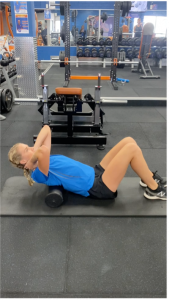
The first article that we are going to examine compares the effects of foam rolling on performance and recovery. This article discussed and assessed the effectiveness of whether foam rolling is more effective being used during warmup, to aid performance or more effectively used as a cool-down for recovery. This article showed that foam rolling does not seem to impede performance but appears to be a performance enhancing tool due to its effects on flexibility prior to a bout of exercise when used in specific doses.
Based on the effects of foam rolling on flexibility during a warm-up, studies show success in foam rolling replacing static stretching and being used in combination with dynamic stretching and active warm-up routines.
When using foam rolling as part of an active warm-up, it maintains muscle contractility and may be particularly useful for sports that require both flexibility and force production. This shows that foam rolling could be supplemented for static stretching at the beginning of an exercise session (Wiewelhove, et al., 2019).
On the other hand, another article had a different perspective on foam rolling and whether this intervention works to improve performance over time. The article assessed whether foam rolling assists with soreness and recovery. As part of this study the participants were subjected to either 20 mins of foam rolling post exercise sessions or no foam rolling at all.
After an intense bout of exercise, which caused the participants DOMS, foam rolling enhanced recovery as well as reducing physical performance declines.
This study directly looked at the quadriceps muscle, in which foam rolling substantially improved quadriceps muscle tenderness by a moderate to large amount in the days after fatigue. They established that 20 minutes of foam rolling post intense exercise may reduce muscle tenderness and decrements in multi-jointed dynamic movements due to DOMS. Conclusively, foam rolling may reduce muscle soreness which leads to a greater improvement in performance over time (Pearcey, et al., 2015).
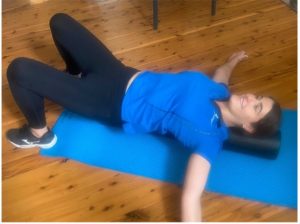
With myofascial release or foam rolling becoming an increasingly common modality to supplement traditional methods of massage, it is important to determine the effects it can have on performance. The main goal of this study was to establish whether foam rolling before exercise can lead to improvements in performance. Fatigue was a main measure that was calculated which was proven to be significantly less in those participants that completed the foam rolling prior to their exercise session.
Foam rolling may offer subjects a feeling of relaxation, which may have psychological benefits to some people.
This psychological element, which this article identified, with reduced feeling of fatigue may lead to individuals extending acute workout time and volume which over time can lead to chronic performance enhancements (Cheatham, Kolber, Cain, & Lee, 2015).
The use of foam rolling is very controversial with varying opinions and research existing surrounding its effectiveness. After examining these articles which investigate the use of foam rolling as a supplement to warmup or cool down, the physical and psychological effects of foam rolling and looking at the connection between pain, performance, and foam rolling, we have been able to clarify the specific use of this intervention. The trials have been able to generate results of minimal effective benefits including providing shorter term pain relief. The articles identify that foam rolling relieves muscles stiffness and can increase range of motion within the joint which can lead to improvement in performance. However, these articles state that foam rolling should be done in combination with dynamic stretching and an active warm-up before a training session.
Ultimately, whether the reductions in pain or improvements in performance are psychological, foam rolling has been shown to be of great benefit to both the athletic and general population.
Call Longevity Exercise Physiology Edgecliff, Pymble, Marrickville, Randwick, Drummoyne, Balmain, Bella Vista and Neutral Bay on 1300 964 002 to enquire today!
Written by Annabel Bergman

References:
Wiewelhove, T., Döweling, A., Schneider, C., Hottenrott, L., Meyer, T., Kellmann, M., Pfeiffer, M. and Ferrauti, A., 2019. A Meta-Analysis of the Effects of Foam Rolling on Performance and Recovery. Frontiers in Physiology, 10.
Cheatham, S., J. Kolber, M. and Lee, M., 2015. The effects of self‐myofascial release using a foam roll or roller massager on joint range of motion, muscle recovery, and performance: a systematic review.International Journal of Sports Physical Therapy, 10(6).
Healey, K., Hatfield, D., Blanpied, P., Dorfman, L. and Riebe, D., 2014. The Effects of Myofascial Release With Foam Rolling on Performance. Journal of Strength and Conditioning Research, 28(1), pp.61-68.
Pearcey, G., Bradbury-Squires, D., Kawamoto, J., Drinkwater, E., Behm, D. and Button, D., 2015. Foam Rolling for Delayed-Onset Muscle Soreness and Recovery of Dynamic Performance Measures. Journal of Athletic Training, 50(1), pp.5-13.
Hendricks, S., Hill, H., Hollander, S., Lombard, W. and Parker, R., 2020. Effects of foam rolling on performance and recovery: A systematic review of the literature to guide practitioners on the use of foam rolling. Journal of Bodywork and Movement Therapies, 24(2), pp.151-174.
Nosaka, K., 2021. Do you believe a foam roller helps with muscle pain after exercise? Here’s what science says. [online] Abc.net.au. Available at: <https://www.abc.net.au/news/2021-12-08/muscle-pain-exercise-do-foam-rollers-work/100680802> [Accessed 28 January 2022].