
Exercise and Lymphedema
Longevity Exercise Physiology Drummoyne, Edgecliff, Marrickville, Bella Vista, Randwick, Pymble, Balmain and Neutral Bay examine the role of exercise in managing and preventing lymphedema.
Lymphedema refers to tissue swelling caused by the accumulation of fluid that is usually drained through the lymphatic system. It most commonly effects the arms and legs but can occur in the chest wall and abdomen.
Firstly, what is the lymphatic system?
The lymphatic system has many functions, but simply put, it can be thought of as the bodies ‘sewage system’ helping rid the body of toxins and waste materials. The lymphatic system has a strong role in our general and specific immune responses and maintaining body fluid levels. Lymph nodes are an important element of the lymphatic system and work as filters for foreign substances. They also contain immune cells called lymphocytes that destroy cancer cells and bacteria.
Lymphedema can be caused by cancer treatments that remove or damage your lymph nodes. This can impact the drainage of lymph fluid and cause lymphedema. The most common causes of lymphedema include:
- Cancer- A tumour growing near a lymph node can impact the flow of lymph fluid
- Radiation treatment
- Surgery- When diagnosed with cancer, it is common to have lymph nodes removed to see if the cancer has spread
Risk factors that increase the likelihood of developing lymphedema include being overweight, rheumatoid arthritis and old age (Mayo Clinic Staff, 2021).
So, where does exercise come into the picture?
Research has shown a supervised exercise program by a certified lymphedema therapist or other allied health professional, such as an Exercise Physiologist, is not likely to increase the risk of lymphedema after cancer surgery or treatment. (BreastCancer.org, 2020)
A recent study, PAL, (Physical Activity and Lymphedema) enrolled 154 women at risk of breast cancer related lymphedema into two groups, a resistance training group, and no exercise group. Women who completed the resistance training program were found to be no more likely to develop lymphedema. After 1 year, 11% of women who completed the weights program developed lymphedema comparted to 17% of women in the no exercise group. (Kathryn H. Schmitz, 2009)
Furthermore, exercise is recommended for individuals who have lymphedema to promote positive outcomes related to lymphatic drainage. Lymphatic flow is supported by respiration, blood flow and skeletal muscle contractions. Therefore, a mixed exercise program which includes aerobic and resistance training is best (Hayes, 2019). As part of the same study mentioned above, 141 women who had stable lymphedema were divided into the same two groups, a progressive resistance training program or no intervention. Women in the weight training group were found to be at no higher risk of developing arm swelling and had a lower incidence of lymphedema flare ups (Kathryn H. Schmitz, 2009).
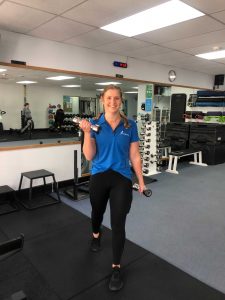
Designing an Exercise Program
The most important consideration when designing an exercise program is to increase intensity and volume gradually. Therefore, it is beneficial to consult a specialist or Exercise Physiologist, who understands the role of exercise for lymphedema and knows how to progress a program appropriately and effectively. Other considerations include
- Wearing a compression garment– however, if this presents as a barrier to exercise, exercise at a low intensity without a garment with close supervision and monitoring is recommended.
- Start slowly and cautiously, take frequent breaks, and monitor changes- Low impact exercise such as walking and swimming, can be a good start. Monitor affected limb for changes in size, shape, heaviness, and firmness.
- Individualise your exercise to meet your fitness levels and goals– Consider your previous physical activity levels and experience in a gym. If you have never lifted weights before for example, start slow and consult an expert.
- Mixed exercise is best– a combination of flexibility exercises, resistance training and aerobic training is recommended. The lymphatic vessels lie between muscle and the skin, and with activity our muscles contract and relax creating a pump like effect that can assist with lymphatic drainage. Aerobic exercise can also assist with weight loss, keeping in mind obesity is a risk factor for developing lymphedema.
If you or someone you know could benefit from a supervised exercise program for management of lymphedema, call Longevity Exercise Physiology Edgecliff, Pymble, Marrickville, Randwick, Drummoyne, Balmain, Bella Vista and Neutral Bay on 1300 964 002 to enquire today.
Written By Georgia Wassall
References:
BreastCancer.org. (2020, August 5). Lymphedema and Exercise. Retrieved from BreastCaner.org.
Hayes. (2019). The Exercise and Sports Science Australia position statement:. Journal od Science and Medicine in Sport, 1175-1199.
Kathryn H. Schmitz, e. a. (2009). Physical Activity and Lymphedema (The PAL Trial): Assessing the safety of progressive strength training in breast cancer survivors. PMC.
Mayo Clinic Staff. (2021, September 18). Lymphedema. Retrieved from Mayo Clinic: https://www.mayoclinic.org/about-this-site/welcome