
Falls Prevention Part 2
Following on from part 1 on falls prevention, today we will go into detail on what exercises are the most effective in preventing falls.
Exercise is one of the largest evidence based practices in falls prevention. The most effective type of exercise has been shown to be strength, balance, gait and functional activities to reduce falls risk [1]. Gait analysis should focus on improving walking pattern to correct any discrepancies. A multi-dimensional approach to preventing falls is a key factor is creating an effective exercise program [2]. This must be done in a safe environment, for example, standing near a bar during balance exercises or having an Exercise Physiologist present.
The goal of exercise for falls prevention is to reduce risk of fractures, increase independence and decrease all-cause mortality risk.
Strength
“Improving the strength of the muscles in the legs, hips and upper body are vital in reducing the likelihood of a fall occurring.”
Strength reduces muscle fatigue, effectively lowering the risk of falls. Particularly the lower limb muscles are important in supporting the surrounding bones and joints that can be at a higher risk of injury if a fall does occur. Upper body strength is vital for when a fall occurs to protect the body from further injury. For example, shoulder strength can assist in falling onto the hand correctly to reduce fracture risk. Exercises that can help build strength include sit to stands, leg press, calf raises, shoulder press and theraband pulls. Additionally, strength can assist once a fall has occurred as the individual is stronger to get off the floor by using both their upper body and legs to stand back up [2, 5].
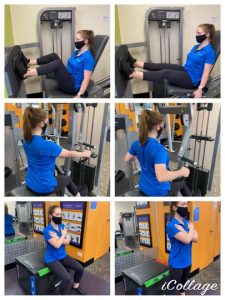
Bone density
Exercise helps to improve bone density which reduces the risk of fractures.
“When we exercise the forces that go through the bone effectively increase bone density.”
This can be achieved with impact loading training such as heel drops, stomping, or any exercises that are deemed safe by your Exercise Physiologist and provide impact through the bones. Resistance training is another form of exercise that increases bone density through the muscles pulling on the bone which causes the production of new, stronger bone [6].
Gait Analysis
Gait analysis can be assessed by your Exercise Physiologist to determine if walking pattern is correct as this can impact falls. This involves correct foot lift, stance, step length, posture and arm swing. Gait can be improved with correct guidance on what muscles are weak that require strengthening [4].
Balance
Balance is a complex motor skill determined by strength, reaction time, speed and coordination [6]. Hence, balance training is essential for a falls prevention program as it improves these factors that contribute to an increased falls risk [2, 3, 6]. This may include single leg balance, progressed to eyes closed or on an unstable surface, illustrated below.
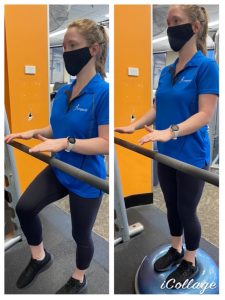
The prescribed exercise program should be performed 3-5 days a week, at 10-12 reps each for 3 sets. It is vital the program is progressive and safe to effectively reduce falls risk. For more detail and demonstration, watch the video below to get a handle on your falls prevention exercises today!
If you are looking to begin an exercise program, give Longevity Exercise Physiology Edgecliff, Pymble, Marrickville, Randwick, Drummoyne, Balmain, Bella Vista, and Neutral Bay a call on 1300 964 002 to book in a session today!
Written by Hannah Boardman

References:
- Lee S, Kim H. Exercise Interventions for Preventing Falls Among Older People in Care Facilities: A Meta-Analysis. Worldviews on Evidence-Based Nursing. 2016;14(1):74-80.
- Gardner M. Practical implementation of an exercise-based falls prevention programme. Age and Ageing. 2001;30(1):77-83.
- Lord S, Castell S. Physical activity program for older persons: Effect on balance, strength, neuromuscular control, and reaction time. Archives of Physical Medicine and Rehabilitation. 1994;75(6):648-652.
- Tiedemann A, Sherrington C, Close J, Lord S. Exercise and Sports Science Australia Position Statement on exercise and falls prevention in older people. Journal of Science and Medicine in Sport. 2011;14(6):489-495.
- Clemson L, Singh M, Bundy A, Cumming R, Weissel E, Munro J et al. LiFE Pilot Study: A randomised trial of balance and strength training embedded in daily life activity to reduce falls in older adults. Australian Occupational Therapy Journal. 2010;57(1):42-50.
- Uusi-Rasi K, Kannus P, Karinkanta S, Pasanen M, Patil R, Lamberg-Allardt C et al. Study protocol for prevention of falls: A randomized controlled trial of effects of vitamin D and exercise on falls prevention. BMC Geriatrics. 2012;12(1).