
Exercise Physiology Strategies to Reduce Chronic Neck and Shoulder Pain
If you spend long hours at a desk and live with ongoing neck or shoulder pain, you are not alone. This is one of the most common reasons people seek out an exercise physiologist. The frustration is that the pain often creeps in slowly, feels hard to pin down, and does not fully settle despite rest, stretching, or short term treatments.
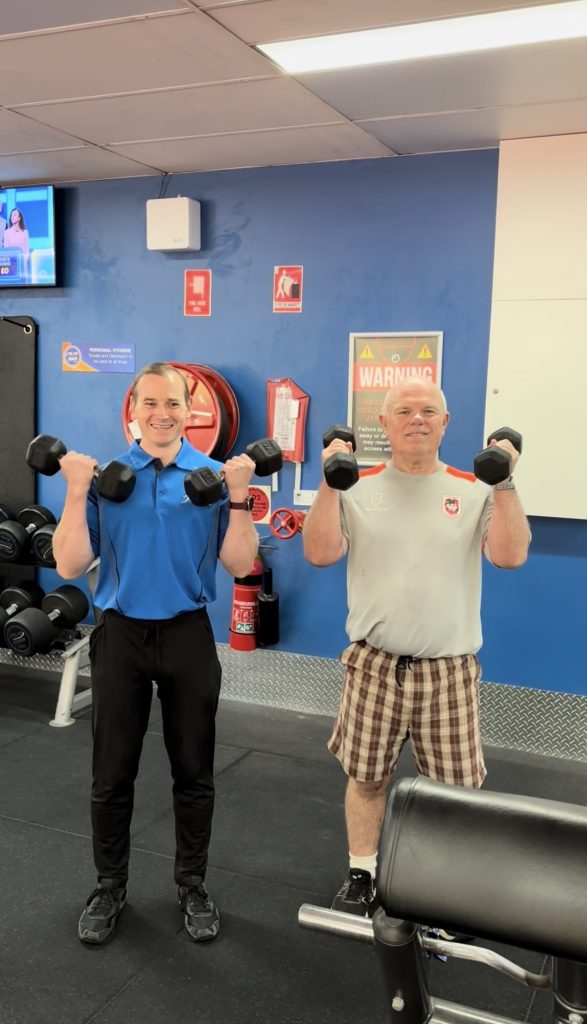
The good news is that chronic neck and shoulder pain is highly responsive to the right kind of exercise. When approached properly, exercise physiology does not just manage symptoms, it builds long term capacity so your body can better tolerate work, training, and everyday life.
Why desk based pain sticks around
Neck and shoulder pain is often blamed on poor posture or a badly set up workstation. While ergonomics can help, they are rarely the full answer, as the real issue for most people is load tolerance. Desk based work exposes the neck and shoulders to the same low level demand for hours at a time, with very little movement variation. Muscles stay lightly switched on, tendons are constantly loaded, and tissues are rarely challenged or rested enough to adapt. Over time, tolerance drops and discomfort becomes persistent. [1].
From a clinical perspective, this means pain is not usually a sign of damage. It is a sign that the system is underprepared for the demands placed on it.
How exercise physiology helps
Exercise is one of the most effective treatments for chronic neck and shoulder pain. Strong evidence shows that targeted shoulder and upper body exercise leads to meaningful and lasting reductions in pain and disability. Importantly, adding passive treatments such as injections or electrotherapy does not significantly improve outcomes beyond exercise alone [2].
For clients, this is empowering. It means your recovery is not dependent on quick fixes or constant treatment, but on building strength, control, and confidence through movement.
Starting where your body is at
Many people with chronic neck and shoulder pain feel guarded, stiff, or worried about making things worse. In these cases, jumping straight into heavy strengthening is rarely helpful. Exercise physiologists often begin with motor control and movement quality. This focuses on how the neck and shoulder move, not just how strong they are. Early improvements are commonly seen in function and confidence, even before pain fully settles [3].
As tolerance improves, load is gradually increased. Strength and endurance work are layered in so tissues adapt and become more resilient. There is no single perfect exercise program. What matters is that it is tailored to you, progressed appropriately, and fits into your life.
Rethinking sitting and movement
Sitting itself is not the enemy. Sitting without variation is. A Longevity focused exercise physiology approach looks beyond the gym. It considers how you move across the day, how often you change positions, and how work demands interact with your current capacity. Small changes, combined with structured exercise, help distribute load more evenly and reduce flare ups over time.
What progress actually looks like
One of the most important parts of recovery is setting realistic expectations, as pain does not always improve in a straight line. Early signs that things are working often include:
- Fewer flare ups
- Improved tolerance to desk work
- Better sleep
- Increased confidence using your neck and shoulders
- Greater capacity to exercise or stay active without symptoms escalating
When progress is measured by improved capacity rather than pain alone, people are more likely to stick with their program and achieve lasting results. Therefore a Longevity focused exercise physiologist does more than prescribe exercises. They assess how your work, training history, stress, and recovery contribute to your pain. They design a program that builds resilience, not just short term relief. They guide progression, reduce fear around movement, and help you understand what your pain means. For people with chronic neck and shoulder pain, this approach shifts the focus from fixing a problem to building a body that can better tolerate the demands of everyday life. That shift is often what leads to long term change.
Call us at Longevity Exercise Physiology Ascot Vale, Aspley, Broadbeach, Casey, Castle Hill, Coburg, Deagon, Drummoyne, Edgecliff, Five Dock, Gladesville, Gungahlin, Kingsgrove, Liverpool, Macarthur Campbelltown, Marrickville, Neutral Bay, Penrith, Pymble, Pyrmont, Randwick, Rhodes, Rosebery, Springfield, Yamanto today on 1300 964 002.
References
- https://pubmed.ncbi.nlm.nih.gov/35356625/
- https://pubmed.ncbi.nlm.nih.gov/38683828/
- https://pubmed.ncbi.nlm.nih.gov/38848304/
- Guduru RKR, Domeika A, Obcarskas L, Ylaite B. The ergonomic association between shoulder, neck/head disorders and sedentary activity: a systematic review. J Healthc Eng. 2022;2022:5178333. doi:10.1155/2022/5178333.
- Silveira A, Lima C, Beaupre L, Chepeha J, Jones A. Shoulder-specific exercise therapy is effective in reducing chronic shoulder pain: a network meta-analysis. PLoS One. 2024;19(4):e0294014. doi:10.1371/journal.pone.0294014.
- Lafrance S, Charron M, Dubé MO, Desmeules F, Roy JS, Juul-Kristensen B, Kennedy L, McCreesh K. The efficacy of exercise therapy for rotator cuff–related shoulder pain according to the FITT principle: a systematic review with meta-analyses. J Orthop Sports Phys Ther. 2024;54(8):499–512. doi:10.2519/jospt.2024.12453.
Written by Caitlin (Intern)