
Why You May Not Be as Old as You Think And How Exercise Can Keep It That Way
You’ve been through a lot. A diagnosis. A lingering injury. That feeling that your body just doesn’t recover like it used to. You’ve tried rest, rehabilitation, maybe even specialists. But despite your best efforts, it’s like time keeps marching on but your body just can’t keep up.
But what if that wasn’t the full story? What if the real answer wasn’t in managing symptoms, but in improving the underlying conditions that are speeding them up?
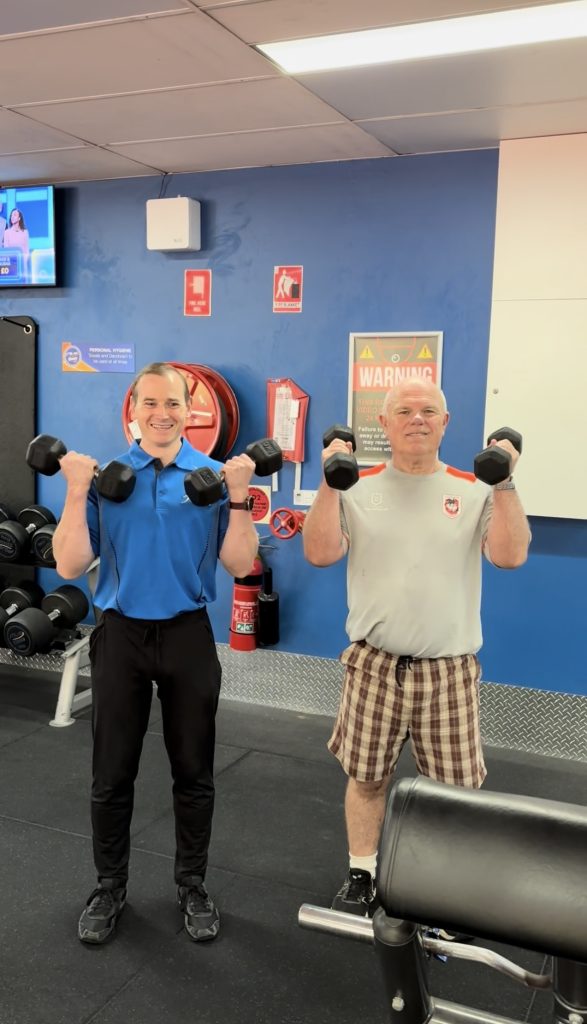
Chronological Age vs. Biological Age: What’s the Difference?
Chronological age is simple. It’s the number of candles on your birthday cake. But biological age can be different. It reflects how your cells, organs, and systems are functioning, which can be improved!
Research shows that regular combined aerobic and resistance training can lower biological age markers, improving everything from VO2 max (your body’s oxygen efficiency) to grip strength, which is increasingly being used as a predictive marker for health and longevity.
Even more exciting? Exercise can positively influence epigenetic markers: the chemical switches that determine how your genes behave. In other words, movement has the power to switch on the genes that support healing, vitality, and resilience.
The Science
A landmark study published in Cell Metabolism (2017) showed that high-intensity interval training improved mitochondrial function and gene expression in older adults. A 2020 review in Frontiers in Aging Neuroscience highlighted that combined resistance and aerobic exercise was associated with slower epigenetic aging and reduced risk of chronic disease.
Meanwhile, low grip strength has been linked with higher mortality rates. Yet, you can take action to increase it, no matter your age.
Increasing your VO2 max (a measure of your fitness and how efficiently your body uses oxygen during exercise) and strength isn’t just about numbers on a fitness test. It is about reclaiming your independence. It’s the difference between needing help to carry groceries and confidently lifting your own shopping bags. It’s walking up stairs without stopping to catch your breath. It’s keeping up with your kids or your grandkids.
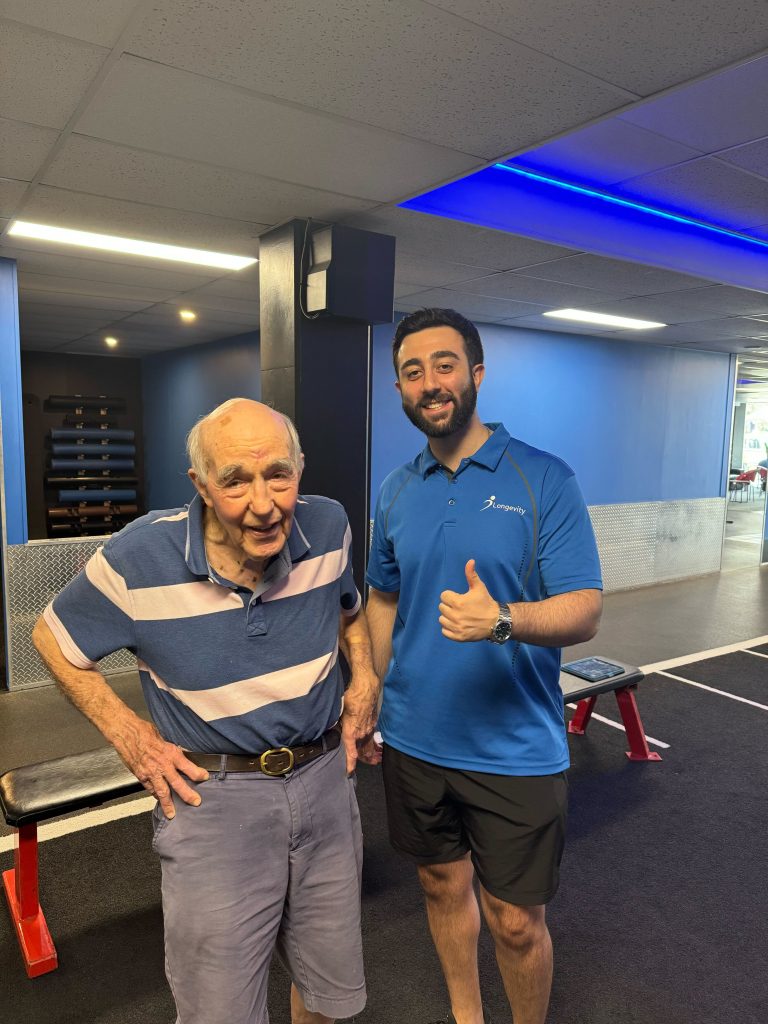
From Setback to Comeback
We know what it’s like to feel stuck. You’ve been living with chronic illness or injury, trying everything, but progress feels out of reach. Our approach is built specifically for people who are looking for guidance:
- A long-term strategy.
- Gym-based: expert treatment at your local gym.
- 1:1 sessions with an Exercise Physiologist who knows your history, your challenges, and your goals.
- Lifetime booking system so you’re never left behind.
- True collaboration between you, your EP and your broader health team.
We’re not here for reps and sets. We’re here for remission. For resilience. For getting back to doing the things you love.
Hundreds of people have already started their journey with Longevity. From chronic pain survivors to those navigating life with long-term illness, our clients have benefited immensely from the positive impact of regular exercise.
Turn Back The Clock Today
It’s time to take your health off pause and hit play on a whole new chapter. One where every session brings you closer to a body that functions the way you would like it. Exercise can:
✅ Increase your strength, mobility and function.
✅ Provide you with the tools to manage your pain long-term.
✅ Mitigate the risk of chronic disease.
✅ Get back on your feet after injury.
✅ Live healthier and for longer.
Ready to take the first step toward increasing your fitness and lifespan? Call Longevity Exercise Physiology Ascot Vale, Burwood, Casey, Castle Hill, Coburg, Drummoyne, Edgecliff, Five Dock, Gladesville, Gungahlin, Kingsgrove, Liverpool, Macarthur Campbelltown, Macarthur Tindall, Marrickville, Neutral Bay, Penrith, Pymble, Pyrmont, Randwick, Rhodes, Rosebery, Springfield, Yamanto today on 1300 964 002 to book your personalised session or a 15-minute free phone consultation.
Written by Omar Barbar
Reference List
1. Robinson, M. M., Dasari, S., Konopka, A. R., et al. (2017). Enhanced protein translation underlies improved metabolic and physical adaptations to different exercise training modes in young and old humans. Cell Metabolism, 25(3), 581–592.e5. https://doi.org/10.1016/j.cmet.2017.02.009
2. Voisin, S., Eynon, N., Yan, X., & Bishop, D. J. (2015). Exercise training and DNA methylation in humans. *Acta Physiologica*, 213(1), 39–59. https://doi.org/10.1111/apha.12414
3. Lohman, M. C., Sonnega, A., & McClintock, M. K. (2021). Grip strength matters: A tool for estimating biological age and predicting health outcomes. The Lancet, 2(9), e512–e513. https://doi.org/10.1016/S2666-7568(21)00164-3.
4. Voelcker-Rehage, C., & Niemann, C. (2013). Structural and functional brain changes related to different types of physical activity across the life span. Neuroscience & Biobehavioral Reviews, 37(9), 2268–2295. https://doi.org/10.1016/j.neubiorev.2013.01.028.
5. Barha, C. K., Davis, J. C., Falck, R. S., Nagamatsu, L. S., & Liu-Ambrose, T. (2020). Exercise dose effects on cognitive and physical function in older adults: A randomized trial. Frontiers in Aging Neuroscience, 12, 123. https://doi.org/10.3389/fnagi.2020.00123.