What Is it Like to Go to the Gym? Hear From Real People Who Gave it a Go

If you’ve ever thought:

“I’m not fit enough for the gym.” “I wouldn’t know where to start.” “What if I make things worse?”

You’re not alone.

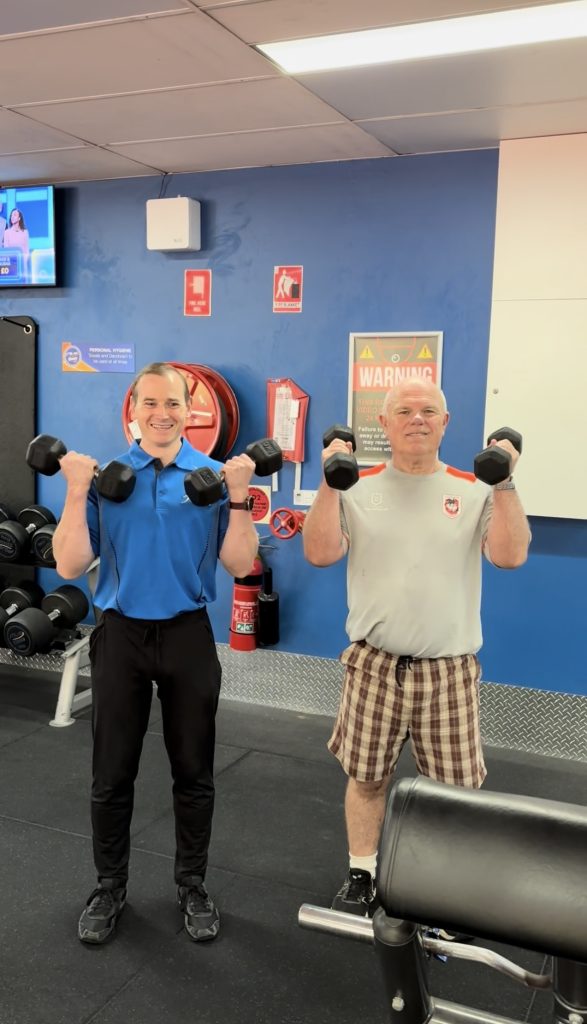
Many of our clients at Longevity felt the same way before they took the first step. But here’s the truth: the gym doesn’t have to be intimidating. With the right support, it can be a place of healing, strength, and confidence.
Why People Hesitate to Start

For those living with chronic injuries or illnesses, the gym can seem like a daunting place. Fears of judgment, not knowing what to do, or the risk of exacerbating existing conditions are real concerns. 

However, these concerns shouldn’t stop you from experiencing the benefits of exercise.

At Longevity, we specialise in helping individuals overcome these barriers. Our Exercise Physiologists work closely with you, providing personalised guidance to ensure your journey is safe and empowering.

Real Stories, Real Transformations

Hear about people’s experience with the gym from our very own clients:

‘I avoided gyms for years. I thought everyone would stare, and honestly, I didn’t think my body could cope. But my EP at Longevity, met me exactly where I was—physically and emotionally.’

‘I assumed the gym was for the fit and healthy. I didn’t belong there. But Longevity wasn’t your typical gym. I had a 1:1 session with my Exercise Physiologist every week. They explained every move and adjusted everything to suit my recovery.’

What We Do Differently 

At Longevity, we understand that starting your fitness journey is a big step. That’s why we offer:

  • Gym-based 60-minute 1:1 sessions tailored to your needs.
  • A long-term approach to health, setting you up for success now and into the future.
  • Direct collaboration with your Exercise Physiologist, ensuring personalised care every step of the way.
  • A lifetime booking system, helping you stay consistent and committed to your goals.

Our clients appreciate the personalised attention and the supportive environment we provide. As one client shared:

‘The team at Longevity has been incredibly supportive and knowledgeable. They tailored a program that suited my specific needs and helped me regain my strength and confidence.’

The Benefits of Getting into the Gym

Taking that first step into the gym can lead to:

  • Increased strength and endurance.
  • Reduced pain and improved mobility.
  • Better sleep and mental health.
  • A renewed sense of confidence and independence.

The benefits of exercising, especially if you have a long-term health condition, far outweigh the perceived discomfort of the gym environment. For the most part, it is a supportive community built around the idea of getting better and doing better.

Ready to Take the First Step?

The thought of going to the gym may initially be confronting, but it is one of the best decisions you will ever make for your health. Get guidance from an expert exercise physiologist to rule out the uncertainties and make the progress you need and deserve. Get fitter and stronger and join a Longevity community committed to your recovery. 

Ready to take the first step toward increasing your fitness and lifespan? Call Longevity Exercise Physiology Ascot Vale, BurwoodCaseyCastle HillCoburgDrummoyneEdgecliffFive DockGladesvilleGungahlinKingsgroveLiverpool, Macarthur Campbelltown, Macarthur TindallMarrickvilleNeutral BayPenrithPymblePyrmontRandwickRhodesRosebery, Springfield, Yamanto today on 1300 964 002 to book your personalised session or a 15-minute free phone consultation.

Written by Omar Barbar
Similar Posts

  • The Top Skills Employers Are Looking for (and How to Build Them Now)

    If you’re a student or recent graduate in the health and exercise space, chances are you’re deeply passionate about helping people live better, longer lives. You’ve worked hard, studied harder, and now you’re standing at the edge of the next big step: your career. But alongside that excitement, there might be uncertainty. What are employers…

  • The 3 “Healthy” Foods That You Shouldn’t Be Eating

    The 3 “Healthy” Foods That You Shouldn’t Be Eating

    I recently read “Salt, Sugar, Fat” by Michael Moss. The book that takes an in depth look into the American processed food industry, food technology, marketing and research. It was an insightful and at times confronting, read. It has motivated me to write this article as sometimes the supermarket can be a very confusing place. 

  • 5 Differences Between Healthy and Unhealthy People

    5 Differences Between Healthy and Unhealthy People

    Being able to come into contact with so many different people of different ages, genders, walks of life and personalities is something I truly enjoy in my work. There is always something to be learnt from meeting and especially training someone who gives you a different perspective on life. In fact, some of my most rewarding work has been done with people with whom rapport was difficult to come by at first. The connection was not strong and my ability to communicate the ideas and concepts I was aiming was challenged. However, once that connection is made and the ‘path of progression’ kicks in it can become an unstoppable force. This week, I consider what the fundamental differences are between healthy and unhealthy people and why some people are far more successful than others in fending off preventable diseases such as cardiovascular disease, Type II Diabetes and some cancers. Here is what I came up with:

  • How to train your obliques

    “Time is the most precious commodity out there. It’s the one thing you can’t buy or ever buy back. Give it your absolute all to whatever task it is your doing, no matter how big or small it is.” – Muscle Prodigy

    This is a deep quote that hits home every time we read it. Ultimately, this has brought us to writing this article on rest periods.

    Why is it that we are constantly feeling pressed for time? Why do we always keep track of time whether it’s with our cell phones, watches, or clocks? Why do we always look at the time to see if it’s 5 pm yet at work? We are always keeping track of time, but why is it that we don’t keep track of time when we are training, as in our rest periods?

    We’ve found that a lot of people don’t do it simply because they are always in a rush, too lazy to keep track of it, or they don’t understand the benefits of it. So, before we get down-right nasty with this article, just remember that this might not be your cup of tea, but trust us, we will make you think twice about going to buy a stop watch or busting out your I Pod’s stop watch during training.

    How Much Time Should You Rest?

  • City2Surf: The Inside Running

    With a lot of my clients currently preparing for the City2Surf I thought it would be pertinent to pass on some of my advice as a former distance runner turned sprinter on some of the do’s and don’ts of the world’s most popular fun run.

    I first competed in the City2Surf when I was 16. I was fortunate to enough to be sponsored by the Department of Sport and Recreation and it was quite the adventure travelling to Sydney for the first time by plane from Gunnedah.

    That year I made a lot of mistakes but still managed a great time of 51mins 15secs especially when I enjoyed the luxury of a preferred start position. The race record is 40mins 3secs set by Steve Moneghetti in 1991 (see picture above). Since then I have run the race a further 5-6 times with all times under 60mins. I think running under 60mins from the back of the pack is harder than 51min from the preferred start line! It’s not easy running on the gutter for 14km to avoid the crowds and prams. That said, if you know a few tricks you can save yourself a lot of time and energy. Here is my breakdown of how to run a strong City2Surf time: